If you manage facilities, you know the feeling.
You need to track down the maintenance history for an HVAC unit, so you check the spreadsheet your predecessor started. Then you realize the warranty information is in a different file, somewhere. Maybe in a PDF buried in an email from 2019. Or was it on the shared drive? The floor plans are definitely in a CAD file, but you'd need to call IT to open it.
This shouldn't be your reality.
We've talked to hundreds of facility managers, and we keep hearing the same frustration. Your critical building data lives in a dozen different places, like PDFs, spreadsheets, CAD files, maintenance logs, vendor emails. And when you need to make a decision about your facility, you're constantly chasing down information that may or may not be current. When you finally find it, you don't know if you can trust it.
You make decisions based on incomplete information. You have to react to problems instead of preventing them. And you spend way too much time searching for scattered data.
Why We Created Gridbase
We built Gridbase because we believe your job is hard enough, and your systems should make it easier.
For the last decade, we've watched facility managers juggle impossible workloads with legacy tools that create more work than they solve: keeping buildings safe, maintaining assets, responding to emergencies, all while working with limited budgets, lean teams, disparate systems and scattered data.
The last thing you need is software that makes your life harder.
We also know what happens when facility knowledge walks out the door. When your experienced maintenance tech retires, their institutional knowledge shouldn't disappear with them. When budget season comes around, you shouldn't have to scramble to justify replacement costs because you can't quickly access your asset depreciation data.
You deserve to feel confident and in control of your facility. And that requires something simple: reliable visibility into your buildings with one intuitive platform that helps manage all your facility operations.
So that's why we built Gridbase.
How Gridbase Actually Helps
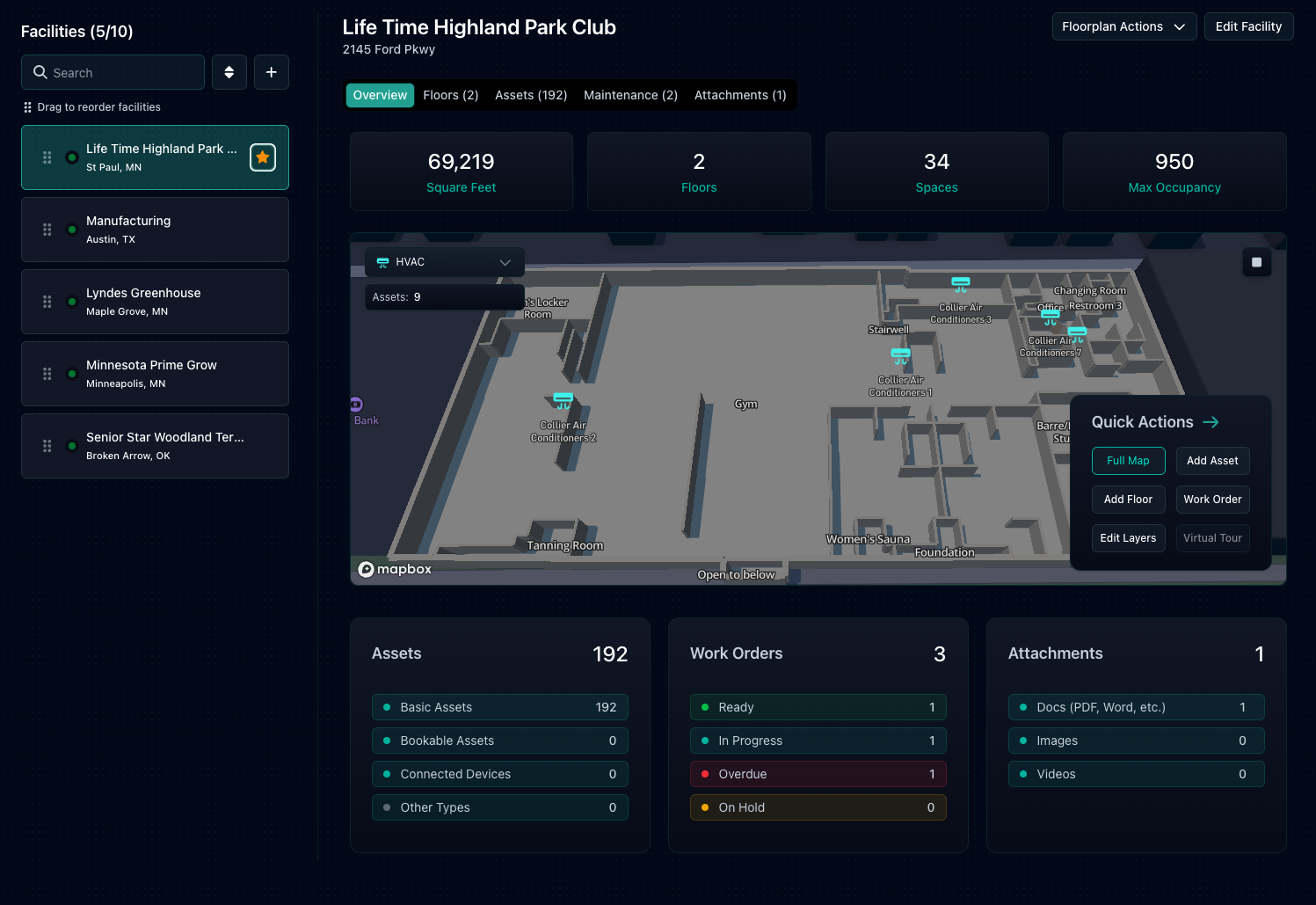
Gridbase is an AI-powered facilities operations platform that brings together everything you need to manage your facility—3D floor plans, asset management, maintenance and inspections, inventory, and reporting—all in one place.
Instead of toggling between multiple systems or hunting through file folders, you get one source of truth for your entire facility. When you need to know the status of an asset, assign a work order, check your inventory, schedule an inspection, or pull a report, it's all right there.
Here's what that means in practice:
- Your team will actually use it. We designed Gridbase with you in mind. It's simple enough that your whole team can get up and running fast, but powerful enough to handle the complexity of your facility operations. Mobile-friendly for your techs in the field. Easy enough that people will actually submit tickets.
- You stop guessing and start knowing. With full visibility into what's working and what's not, you can shift from reactive firefighting to proactive management. You'll know which assets need attention before they fail, not after.
- Your knowledge stays put. When team members move on, their expertise doesn't have to leave with them. Everything is documented, searchable, and accessible to whoever comes next.
- You'll be set up for success with our onboarding and implementation process. Our team handles the heavy lifting of collecting and digitizing your data. We make it easy to get started, and we're available within 15 minutes or less to ensure you get the full value from the platform.
Looking Ahead
We exist to offer you a practical, intuitive platform built for teams too busy to learn complicated software.
Because at the end of the day, you shouldn't have to waste time and energy chasing down data you can't find. You should be able to see, clearly and quickly, what's working and what's not, so you can make better decisions and manage your facility with confidence.
That's why we built Gridbase. And we're just getting started.